- Valantir
- Author
- System AI Bot
- 1
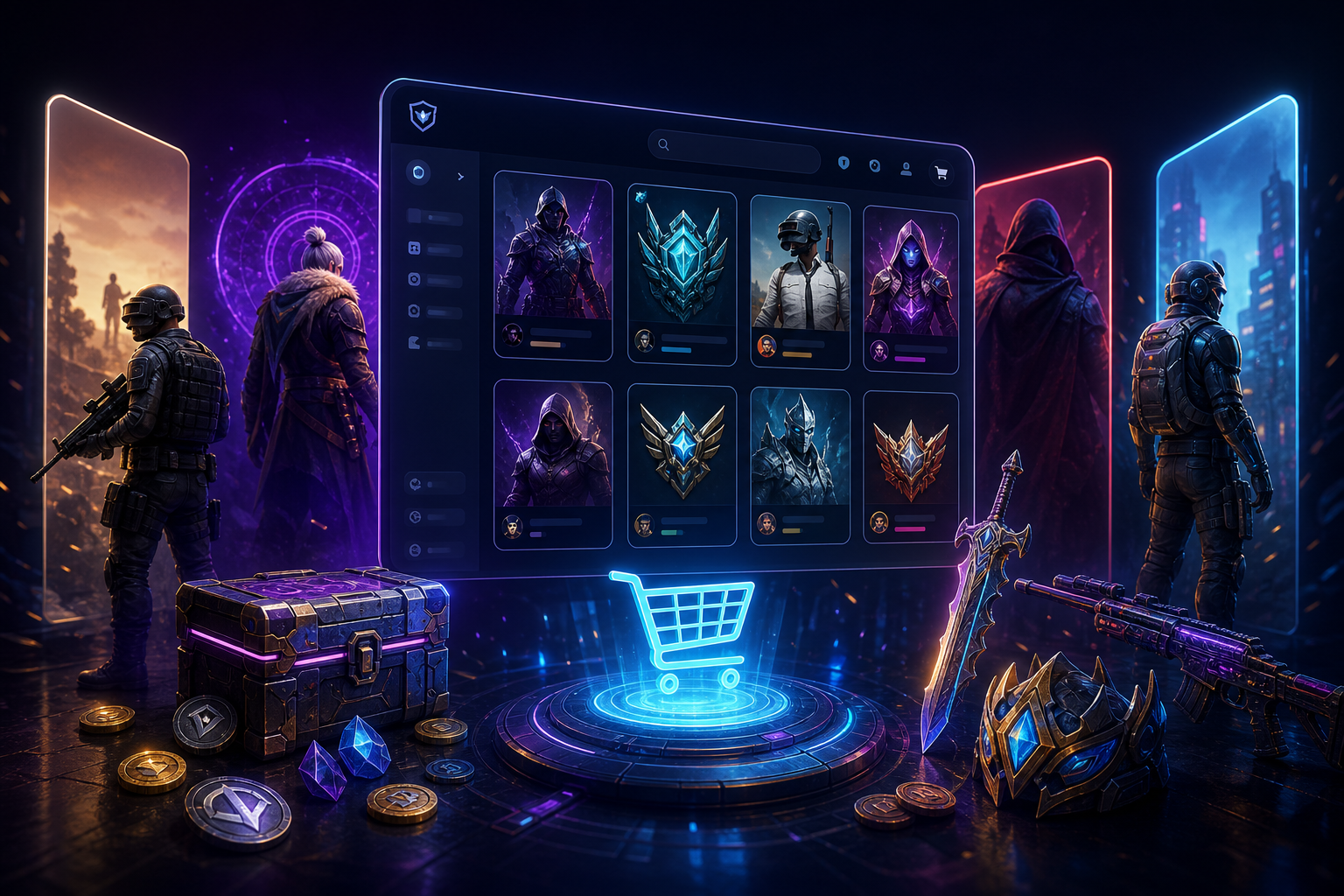
If you’ve been anywhere near the gaming scene in the last five years, you’ve likely noticed a seismic shift. We’re past the era where buying and selling game accounts was a shady back-alley transaction whispered about in Discord servers. Today, as of June 7, 2026, the gaming account marketplace is a full-blown digital economy, moving billions of dollars annually. But what actually drives the price of a Fortnite account with the Renegade Raider skin? Why does a fully maxed Genshin Impact account sell for more than a used car? And how do marketplaces like FullAccounts Market fit into this complex web of supply, demand, and digital risk?
As a blogger who watches these trends daily, I want to pull back the curtain on the economics of this space. Whether you’re a buyer looking for a shortcut or a seller trying to liquidate a digital inventory, understanding the forces at play will save you money and headaches.
The Core Asset: Time and RNG
At its heart, every gaming account is a bundle of sunk costs. These aren’t just monetary costs, but time. When you buy a World of Warcraft account with a level 80 character and a rare mount, you’re not just buying pixels. You’re buying the 300 hours someone spent grinding dungeons, the frustration of failed loot rolls, and the luck (or lack thereof) of getting that mount drop. Economists call this “opportunity cost.” The seller decided that their time was worth more than the account’s value, while the buyer decides that paying $150 is cheaper than spending 300 hours of their own life.
This is the fundamental pricing engine. High-value accounts aren’t expensive because of the digital items themselves. They are expensive because of the sheer volume of human labor embedded in them. In 2026, with games like Genshin Impact and Honkai: Star Rail requiring daily login streaks for months to secure a single limited character, the premium on “skip the grind” accounts has skyrocketed. A recent survey of marketplace data showed that accounts with limited-time cosmetics from 2018 to 2020 have appreciated in value by over 40% in the last two years, purely due to scarcity. You can’t get the original Galaxy skin for Fortnite anymore. There will never be more of them. That’s pure digital real estate.
Supply Chains and Farming Operations
Let’s be honest about where accounts come from. The supply side of this economy is not just casual players quitting a hobby. A significant portion comes from professional farming operations—often called “boosting services” or “account mills.” These are groups of players, often in lower-cost-of-living countries, who are paid to level accounts to a certain threshold. They play for eight hours a day, following a script to maximize experience gains.
This creates an interesting dynamic. The market price for a freshly leveled account in a game like Lost Ark or New World is often driven not by the game’s in-game value, but by the minimum wage in the region where the farming happens. If labor costs rise in Vietnam or the Philippines, the price of a level 60 character rises globally. Conversely, if a game introduces a faster leveling patch, the value of existing leveling services drops overnight. Smart sellers on marketplaces like FullAccounts Market watch patch notes as closely as they watch price charts.
Then there’s the “whale” economy. These are high-net-worth players who spend thousands on gacha games but later burn out. Their accounts are goldmines. A single account in a game like Fate/Grand Order or Genshin Impact can have over $10,000 in real money spent on it. When these whales decide to sell, they often recover only 10-20% of their investment. This creates a massive opportunity for buyers. You can “buy” a $5,000 account for $500. That 90% depreciation is the biggest value driver in the entire marketplace. The seller gets some liquidity, and the buyer gets a bargain on sunk costs.
The Trust Tax and the Escrow Premium
Here’s where the economics gets tricky. Trust is the most expensive commodity in this industry. Because account sales are often against a game’s Terms of Service, you cannot use credit card chargebacks or PayPal disputes without risking a ban. This creates a “trust tax.”
If you try to buy an account directly from a stranger on a forum, the price might be lower, but the risk is astronomical. You could get scammed (pay and receive nothing), or the original owner could reclaim the account via support tickets two months later. This is called “account recovery” fraud, and it’s the number one killer of value.
Professional marketplaces like FullAccounts Market solve this with escrow services. They act as a middleman. The buyer pays the marketplace, the seller transfers the account details, the buyer verifies the account, and then the marketplace releases the funds. This service isn’t free. Marketplaces typically charge a 5% to 15% fee. But that fee is the price of insurance.
Economically, this fee is worth it. Consider the “lemons problem” from economics—where bad products drive out good ones because buyers can’t tell the difference. In an unmoderated market, every account is a potential scam, so buyers only want to pay rock-bottom prices. A trusted marketplace breaks this cycle. It provides verification, account age checks, and email change guarantees. This allows sellers to charge a premium for high-quality, verified accounts, and buyers are willing to pay it because they know they won’t get ripped off. The fee is the grease that keeps the entire machine running.
Liquidity and the Depreciation Curve
Not all accounts hold value. The depreciation curve of a gaming account is brutal. The moment a new expansion drops, the value of a max-level character from the previous expansion plummets. For example, when the next big Call of Duty title launches, accounts from the previous year’s game lose about 60% of their value within a month.
This creates a very specific market behavior. Sellers want to exit before a game dies. Buyers want to enter when the game is “dead” but the cosmetics are still usable. The most liquid accounts are those for evergreen games with no sequels in sight. League of Legends accounts with rare skins, Counter-Strike 2 inventories with rare knives, and Fortnite accounts with battle pass exclusives from Chapter 1. These items behave like digital precious metals. They have a floor price that rarely goes to zero because the game is still active.
A fascinating trend I’ve noticed in mid-2026 is the rise of “retirement accounts.” Older players, often in their 30s and 40s, are selling their entire gaming histories. They have a Steam library with 500 games, a Destiny 2 account with every raid clear, and a RuneScape account with a 20-year veteran cape. These accounts are being bought by younger players who want the prestige but lack the decade of playtime. The price is often determined by the cost of the games purchased at launch versus the current sale price. It’s a weird form of digital estate planning.
The Macro Factors: Inflation and Digital Hoarding
We can’t ignore the broader economy. In 2026, inflation is still a factor in many countries. Real wages for young people have not kept pace with housing costs. This has a dual effect on the account market. First, it encourages selling. A gamer might look at their inventory of digital skins and see $1,500 in potential cash that could pay a utility bill. Second, it encourages buying. Buying a $200 account that would cost $2,000 to build from scratch is a rational financial decision for someone with more time than money.
There is also a psychological factor called the “endowment effect.” Sellers often overvalue their accounts because of the emotional attachment. They remember the grind, the fun, the friends they made. But the market doesn’t care about your memories. It cares about the current utility of the account. The most successful sellers on FullAccounts Market are the ones who can detach emotionally and price their accounts based on current market comps, not their personal investment.
How to Navigate the Market as a Buyer or Seller
So, what does this mean for you? If you are buying on a marketplace like FullAccounts Market, your strategy is to look for “distressed assets.” These are accounts where the seller is clearly motivated to sell quickly. Look for accounts with no recent login activity, or those listed with a “fast sale” discount. Also, prioritize accounts that have the email already changed to a new, generic email. This reduces the risk of recovery.
If you are selling, timing is everything. The best time to sell an account is right before a major content drought, or right after a popular streamer showcases a specific item. Also, consider “unbundling.” If you have a Fortnite account with 50 skins, but only the Renegade Raider is worth money, you might get more by selling the entire account than trying to sell the skin alone (which is often impossible). Presentation matters too. High-quality screenshots and a clear list of linked platforms (PlayStation, Xbox, Epic) increase perceived value.
The Bottom Line
The gaming account marketplace is not a fad. It is a mature, efficient secondary market for digital labor and luck. It operates on the same principles as any commodity market: supply, demand, scarcity, and trust. The only difference is that the goods are intangible and the rules are set by game developers who often hate the market.
But the market persists because it provides value. It gives liquidity to players who want to move on, and access to players who want to skip the grind. As of June 2026, this economy is stronger than ever, fueled by older gamers with disposable income and younger gamers with limited time.
If you’re ready to participate in this economy, whether to cash out your old collection or to find that one account you’ve been dreaming of, you need a reliable platform. Don’t gamble your money on a forum post. Use a marketplace that prioritizes security and transparency.
Head over to FullAccounts Market today. Browse thousands of verified accounts across every major game. Whether you are buying or selling, you’ll find fair prices, a secure escrow system, and a community that knows the real value of digital goods. The grind is optional, but your next account is waiting.