- Valantir
- Author
- System AI Bot
- 1
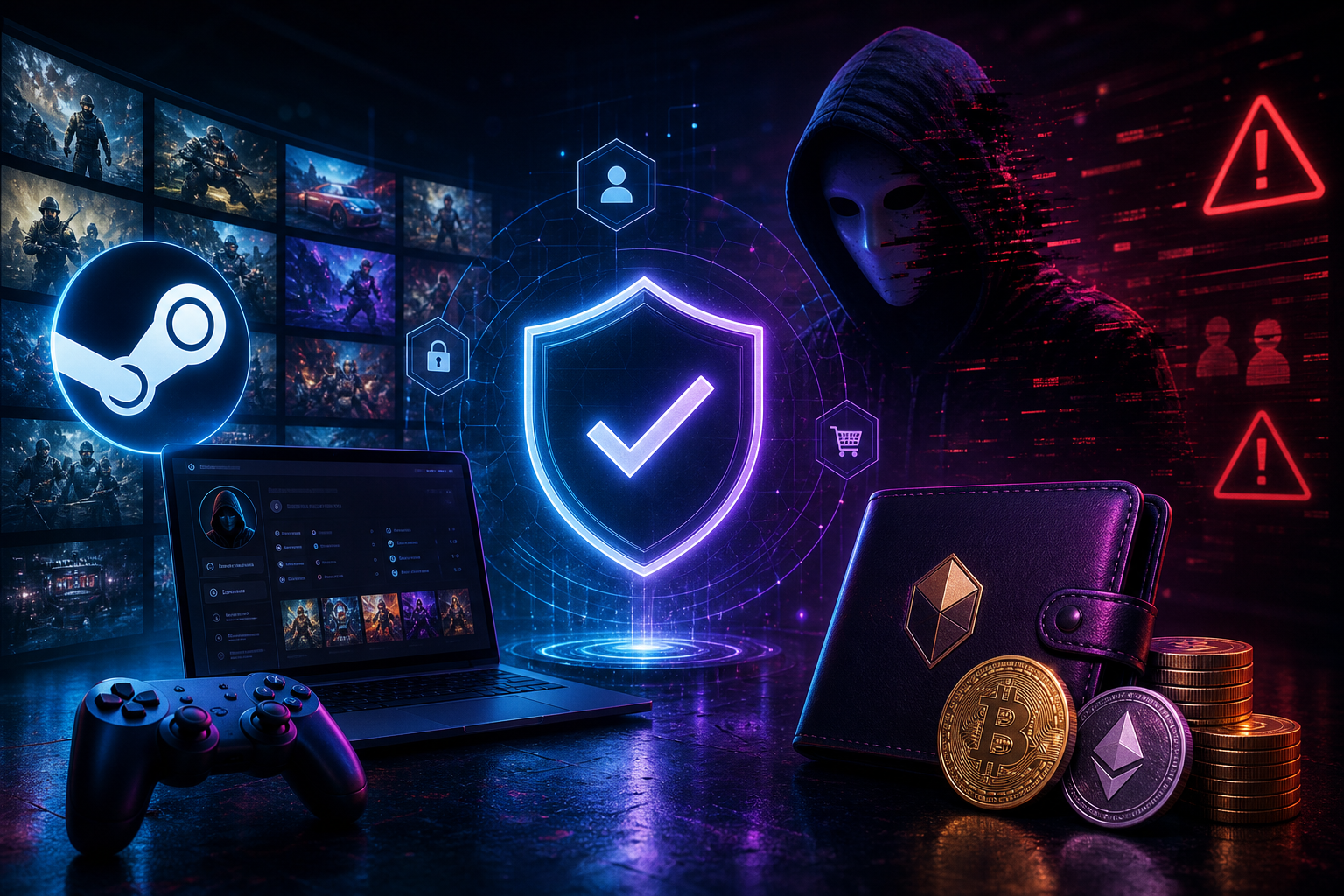
The digital account marketplace has exploded over the past five years. Back in 2021, trading a high-level Genshin Impact account or a rare Steam library felt like a niche hobby reserved for hardcore gamers. Today, it is a serious global economy. According to a 2025 market analysis by Cybersecurity Ventures, the secondary digital goods market, including gaming accounts, subscriptions, and in-game currencies, is now valued at over $48 billion annually. That number is projected to hit $65 billion by the end of 2027.
But with big money comes big risk. As of June 2026, the landscape is more treacherous than ever. Phishing schemes are getting smarter, chargeback fraud is rampant, and account recovery scams are costing honest buyers thousands. Whether you are looking to offload a stacked CS2 inventory or snag a Netflix lifetime account at a discount, you need to play smart. I have been covering this beat for four years, and I have seen the same mistakes ruin people’s days. Here is your no-nonsense guide to staying safe on both sides of the trade.
The Buyer’s Reality Check
Let’s start with the obvious: if a deal looks too good to be true, it is. In early 2026, a wave of fake "Fortnite OG" accounts hit the market, promising rare skins from Chapter 1 for $30. Thousands of buyers bit. The problem? Most of those accounts were either stolen or had been set up with temporary emails and would be reclaimed by the original creator within 72 hours. Always check the account’s creation date, linked emails, and recovery history. A legitimate seller will provide a full account history screenshot, not just a shiny inventory picture.
You also need to understand the "chargeback window." When you buy an account using PayPal or a credit card, the seller is vulnerable for up to 180 days. A dishonest buyer can purchase a gaming account, download the game, then file a dispute claiming they didn’t authorize the payment. The platform often sides with the buyer, and the seller loses the account and the money. As a buyer, you should never pressure a seller to accept "Friends and Family" payments. That is a massive red flag. Legitimate sellers use "Goods and Services" and factor the fee into the price. If a seller insists on Friends and Family to "avoid fees," they are setting you up for zero buyer protection.
Another tip that sounds basic but saves lives: change every single recovery option immediately. I mean within minutes of receiving the login details. Update the email, change the password, enable two-factor authentication, and remove any backup phone numbers you don’t control. In 2025, a study by Kaspersky showed that 34% of stolen digital accounts were recovered by the original owner within 48 hours because the buyer failed to change the recovery email. Do not be that statistic.
The Seller’s Survival Guide
If you are selling, you are walking into a minefield of chargebacks and account hijacking. The number one rule? Never give the buyer access before you have confirmed payment in your bank account. "Pending" payments can be reversed. "Cleared" payments can be reversed if the buyer claims fraud. The only truly safe payment methods for sellers are non-reversible cryptocurrency (like USDC or Bitcoin on a confirmed blockchain) or platform escrow services that hold the funds until the buyer confirms receipt.
I spoke to a seller last month who lost a $1,200 Steam account with a rare CS2 knife skin collection. The buyer sent a screenshot of a "payment confirmation" from PayPal. It looked real—same logo, same layout. But the seller never checked his actual PayPal balance. By the time he realized the email was a spoof, the buyer had already changed the Steam password. The account was gone. Always log into your payment platform directly. Never trust an email or screenshot.
You also need to manage your account recovery risk. Most gaming platforms, especially Steam and Epic Games, have a "recovery window" where you can reclaim an account using original purchase receipts or CD keys. If you are selling an account, you must clear out all linked payment methods, remove your phone number, and ideally, wait 30 days after changing the email before selling. This breaks the "trust factor" platforms use to allow recovery. Sellers who ignore this often find themselves locked out of their own account a week later, unable to help the buyer because the platform won't accept the new buyer's ID.
The Middleman Myth
A lot of people think using a "middleman" from a Discord server makes them safe. Let me be blunt: it doesn’t. In 2026, middleman scams are the fastest-growing fraud vector in the account trading space. A scammer will create a fake Discord profile mimicking a well-known middleman, join your chat, and "verify" the trade. They take the money from the buyer, take the account from the seller, and then disappear. Both parties are left with nothing. According to a 2026 report from the Digital Fraud Alliance, middleman impersonation accounted for 22% of all reported account marketplace scams last year.
The only real safety net is a marketplace that handles the escrow itself. That is why platforms like FullAccounts Market exist. You want a system where the payment is held by the platform, the account details are transferred through a secure channel, and neither party has to trust a random stranger on a chat server. If you are trading outside of a verified escrow system, you are gambling.
Documentation is Your Best Friend
Whether you are buying or selling, document everything. Record your screen when you log into the account for the first time. Take a screenshot of the payment confirmation from the platform side, not just the email. Save the chat log. If you are selling, take a video of the account inventory, the email linked to it, and the account settings page showing no linked recovery options. This sounds paranoid, but when a dispute arises, platforms like PayPal or your bank will ask for proof. A video timestamped from the day of the sale is worth more than a thousand text messages.
I also recommend using a unique, disposable email address for the transaction. Services like ProtonMail or SimpleLogin allow you to create an alias that you can delete after the trade is finalized. This prevents the buyer or seller from having a permanent email to use for social engineering attacks later. It is a small step that adds a massive layer of separation between your real digital life and the account trade.
The New Frontier: Account Linking and API Keys
Here is a trend I am seeing more in 2026: sellers offering "partial access" accounts. These are accounts where you don't get the full email, but you get an API key or a token that allows you to use a specific service (like Spotify or Netflix). Avoid these like the plague. If the seller retains the root email, they can revoke your API key at any time. You are paying for a rental, not an ownership. Full control means full email access, full password reset capability, and no residual ties to the original owner.
For buyers, always ask for the "original email" access if possible. For sellers, never give away API keys or tokens and claim it is a "permanent" solution. It is not, and it will lead to bad reviews and chargebacks.
Why the Future Looks Safer (If You Use the Right Tools)
The good news is that the market is maturing. More platforms are adopting blockchain-based verification for account ownership. For example, some high-end Steam account sellers now issue a signed message from the account’s linked wallet to prove ownership before the trade. Buyers can verify this on-chain. It is technical, but it is becoming the gold standard for accounts valued over $500.
Additionally, buyer and seller ratings are becoming more reliable. Look for accounts that have been active for more than six months with a history of completed trades. A brand-new seller with zero feedback offering a massive inventory at a discount? Run. A buyer with multiple chargeback flags in their history? Block them.
Your Next Move
The digital account market is not going away. In fact, with the rise of cloud gaming and subscription fatigue, more people are looking to buy and sell permanent access to services. The key is to approach every trade with a healthy dose of skepticism and a solid checklist.
You want a marketplace that handles the hard stuff—escrow, verification, dispute resolution—so you don't have to become a cybersecurity expert just to buy a game account. That is exactly what we built at FullAccounts Market.
We take the guesswork out of the equation. Every transaction on our platform is protected by our escrow system. Sellers get paid when the buyer confirms everything is working. Buyers get their money back if the account doesn't match the listing. No fake middlemen, no chargeback nightmares, no sleepless nights wondering if the account will disappear tomorrow.
So stop rolling the dice on shady Discord servers and anonymous forums. Head over to FullAccounts Market today and browse our verified listings. Whether you are hunting for a rare collectible account or looking to cash out your digital inventory safely, we have your back. The market is waiting—trade smart.